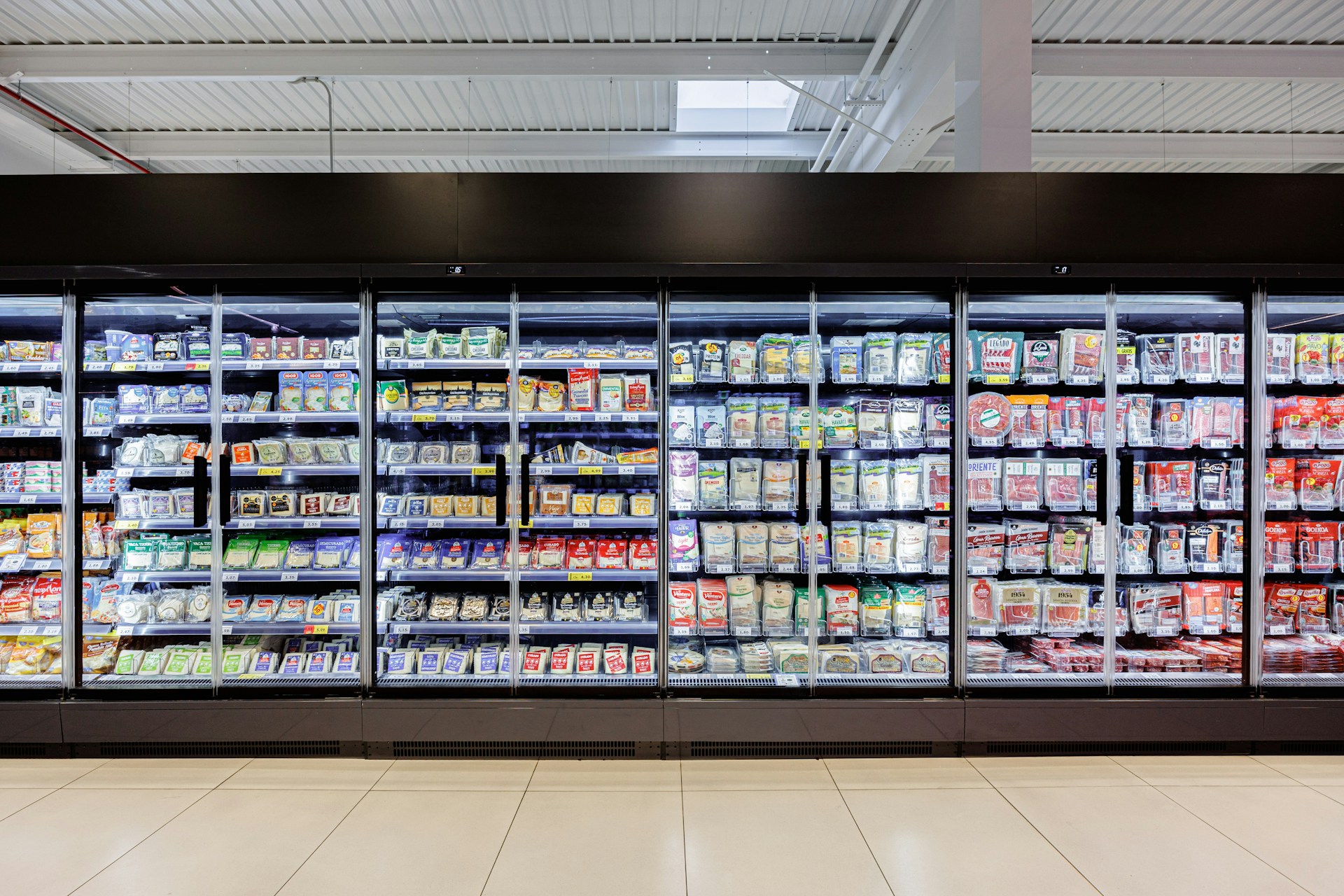
As CPG startups move from early traction into retail expansion, the stakes increase dramatically. Seed funding introduces investor expectations. Retail conversations require credibility. Broker relationships demand professionalism. Manufacturing costs rise. Cash flow tightens. Under this pressure, founders often shift into risk-minimization mode. In brand execution, that typically translates to safer visual systems, conservative packaging decisions, and restrained messaging. The goal is understandable: appear credible, reduce perceived risk, and avoid alienating potential customers. But in saturated CPG categories, visual neutrality rarely functions as protection. More often, it functions as camouflage.
In practice, safe branding in consumer packaged goods often includes:
These decisions feel responsible. They resemble established competitors. They align with what founders perceive retail buyers expect. However, when multiple brands follow this same logic, shelf sets become visually indistinguishable. In categories like better-for-you snacks, functional beverages, protein products, and wellness foods, similarity has become the norm. When every brand signals safety, none of them stand out.
There is a deeper psychological pattern at play. When financial risk increases, founders attempt to eliminate aesthetic risk. Reducing boldness feels like reducing exposure. It feels disciplined and mature. But market dynamics operate differently. Retail buyers evaluate velocity potential. Consumers make split-second visual decisions. Distribution does not guarantee demand.
When branding blends into the competitive set:
In other words, playing it safe may reduce internal anxiety, but it often increases external competitive pressure. For seed-funded CPG startups preparing for broader retail distribution, that tradeoff is expensive.
Retail is a compressed decision environment. Consumers scan quickly. Buyers evaluate category fit and growth potential rapidly. Shelf space is finite and competitive.
Distinctive brand positioning and bold visual systems increase:
Differentiation does not require chaos or gimmicks. It requires clarity. Clear positioning allows brands to express a strong point of view. That point of view can then be translated into packaging, messaging, color, typography, and voice in a way that feels cohesive and confident. For early-stage CPG brands scaling from regional traction to broader retail presence, that cohesion often becomes the difference between early excitement and sustained growth.
It is important to distinguish between strategic boldness and arbitrary maximalism. Bold branding is not about being louder than competitors. It is about being more defined.
It requires:
When these elements are aligned, bold expression strengthens trust rather than undermining it. In fact, strong definition often increases buyer confidence because it signals conviction and scalability.
Many emerging CPG startups achieve early traction through founder energy, niche community support, or novelty within a specific channel. That traction can mask underlying brand ambiguity. Scaling beyond early adopters requires more than distribution expansion. It requires memorability and emotional clarity. At this stage, safe branding often stalls momentum because it fails to communicate a strong identity within a crowded competitive landscape.
Brands that commit to strategic clarity, even when it feels uncomfortable, are more likely to:
Clarity scales. Generality stalls.
For early-stage CPG startups, branding is not a cosmetic decision. It is growth infrastructure. Safe branding may feel prudent when investor capital and retail expansion are on the line. But in crowded categories, visual and strategic neutrality can be the riskiest move of all. The brands that break through are not reckless. They are defined. They make deliberate choices. They express their positioning with conviction. In retail environments where attention is scarce and competition is dense, bravery grounded in strategy is often the safer path to scale.